


WHY IS HOLLYWOOD SO OBSESSED WITH REMAKES?

Newsweek Exclusive
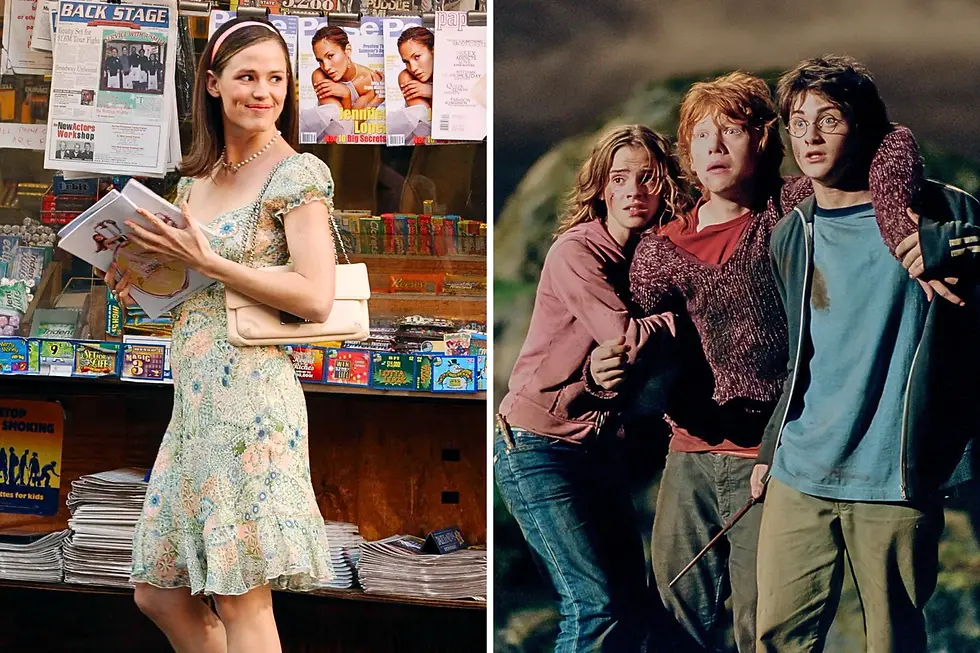
“Harry Potter” to “13 Going on 30,” remakes are back in business. Here’s why.
It is an overcrowded media landscape to say the least, with new books, series, blockbusters—and now, of course, YouTubers, content creators and Twitch streamers—all fighting for the attention of fatigued audiences, overwhelmed before even pressing play.
Perhaps it is then no surprise that, in an endeavor to regain the favor of dwindling, distracted audiences, studios keep reaching for the familiar, reliable, the tried and tested.
When a purist remake does not materialize, a reboot, a live-action retelling, a modern-day sequel or a legacy continuation are on the cards in an industrial-scale exercise in déjà vu. Top of that exercise are now 13 Going On 30 and Harry Potter: The Philosopher's Stone, two early 2000s successes that are being remade.
Recognition cuts through noise, and nostalgia leads to trust and an easier sell in an era of attention scarcity, but when loyal fans keep insisting—often online—that, when the original is not broken, it should not be fixed, the question becomes more complex.
If remakes are often dismissed as inferior, why do studios keep making them? And why do audiences keep showing up?
The Biggest Remakes
In the past few years, several remakes have dominated the entertainment landscape.
Take Timothée Chalamet-fronted Dune, an example of a remake that made headlines where its source material did not. Denis Villeneuve’s 2021 adaptation landed at 83 percent on Rotten Tomatoes, a striking contrast to David Lynch’s 1984 version, which sits at 36 percent.
Steven Spielberg’s West Side Story was another success. The 1961 original remains a critical heavyweight with a 92 percent Rotten Tomatoes score, yet Spielberg’s 2021 remake followed closely at 91 percent.
Other remakes have been met with more ambivalence. Nicolas Roeg’s 1990 adaptation of The Witches is still celebrated for its deliciously wicked edge, yet the 2020 version, despite being positioned as a sleeker, star-driven redo, flopped.
Disney’s live-action strategy has produced similarly mixed results.
The studio’s 1961 101 Dalmatians is widely praised as one of Disney’s biggest achievements, while Cruella (2021), despite several favorable reviews, struggled to justify the necessity of an origin story and was nowhere near as well received as the 1961 animation.
Across the broader slate of live-action remakes—including Aladdin, Beauty and the Beast and The Little Mermaid—a consistent pattern emerges. The animated originals are treated as benchmarks, while their live-action counterparts are reviewed as competent, often entertaining yet unlikely to capture the charm of the originals.
Television retellings raise the stakes higher, because they ask audiences to reconnect with beloved characters at different cultural moments.
And Just Like That…managed to excite some of Sex and the City's fan base but was widely panned as being inferior to the original, despite Sarah Jessica Parker's best efforts at updating the 90s series for the 2020s. Its third season has a 45 percent rating on Rotten Tomatoes.
Cobra Kai, however, has become a standout counterexample. The sequel to The Karate Kid movies boasts 94 percent on Rotten Tomatoes.
"The strongest remakes reinterpret the material with a clear creative point of view, rather than simply replicate what worked before," Jordan Yale Levine, an award-winning film producer whose titles include Bandit and King Cobra, told Newsweek: "When they feel purely commercial or nostalgic without a fresh lens, audiences disengage.
"While reboots can work and sometimes outperform originals, they’re most effective when they justify their existence creatively, not just financially."
Good Remakes Exist
Remake discourse recently returned to the forefront with the announcement of a new 13 Going on 30, with millennial stars Emily Bader and Logan Lerman in lead roles. A nod to the original, Jennifer Garner takes the role of executive producer. The casting alone signals that a familiar studio pattern is at play in its recruitment of contemporary romcom faces with charm and fans in abundance. While it will be a new cinematic event, it feels pre-sold.
The same argument is now playing out across different fandoms.
HBO's Harry Potter is currently sparking conversation, and the upcoming live-action Moana is raising eyebrows because the animated film is still so recent in the cultural memory and performed immensely well. Even The Devil Wears Prada 2, a safer, long-awaited remake bet, has drawn early side-eye for what some are calling its use of "Netflix lighting" that leaves it instantly inferior to the original.
"Studios gravitate toward remakes because they reduce risk in an increasingly expensive and fragmented marketplace," Levine said. "Recognizable IP cuts through noise, helps with global marketing, and gives financiers more confidence in pre-sales and audience awareness.
"That said, success isn’t guaranteed," Levine added.
Still, it is worth conceding what remake-skeptics often ignore; that remakes are not always low-budget, B‑grade, comfy chick flicks. In fact, the most financially and culturally dominant tend to be the opposite.
Meet the Parents (2000) is one of the cleaner examples of a remake that outgrew its origins. It took an earlier film concept and refined it into a mainstream, star-driven comedy. Ocean’s 11 did something similar. There are also the stories that keep being revisited like A Star Is Born. The most-recent iteration starring Lady Gaga and Bradley Cooper has a 90 percent score on Rotten Tomatoes. The Lion King has also been repackaged for a new generation of kids while selling a dreamy nostalgia ticket to the adults who bring them.
Perhaps that is the point. Though they monetize on memory and cultural capital, remakes promise comfort in an anxious, fast-paced world.
THANK YOU FOR READING
COVER IMAGE CREDIT: GETTY IMAGES
READ THE FULL STORY HERE: Why Is Hollywood So Obsessed With Remakes? - Newsweek
Comments